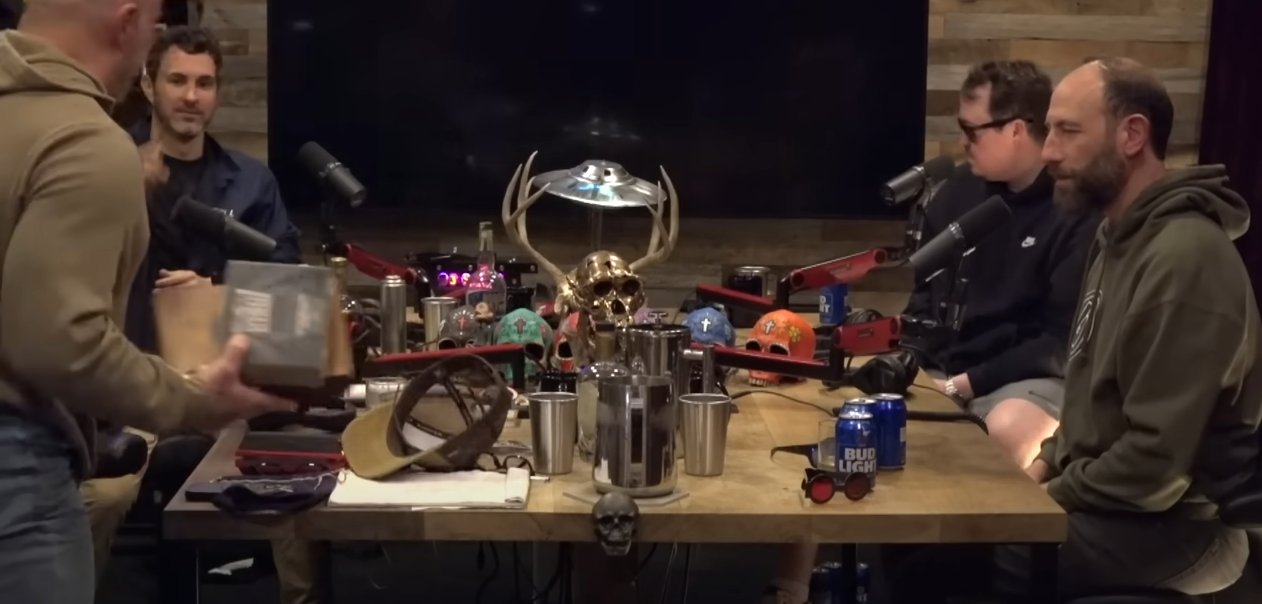
The Shure SM7B is the piece of Joe Rogan’s podcast setup that matters most — and the one we can document with the most confidence.
The rest of the JRE equipment story is messier. Rogan has recorded in multiple studios, hardware gets replaced, and many “Joe Rogan podcast equipment” lists online still mix old LA-studio gear, Austin-studio gear and modern replacements into one supposedly current setup.
This guide does not do that.
Last reviewed: August 29, 2026. We separate gear into well documented, recently documented, and historical / uncertain so you know what is genuinely useful before spending money.
Affiliate disclosure: Rogan Recs may earn a commission from qualifying Amazon purchases. We would rather tell you an old JRE component is obsolete than send you to Amazon to buy the wrong thing.
Joe Rogan’s podcast setup at a glance
| Gear | JRE status | Would we buy it today? |
|---|---|---|
| Shure SM7B microphone | Strongly documented / core JRE gear | Yes — still excellent |
| Sennheiser HD 280 Pro headphones | Recently documented | Yes — practical studio headphones |
| O.C. White Ultima Gen2 boom arm | Recently documented | Maybe — excellent but expensive |
| Focusrite Scarlett 18i8 3rd Gen | Recently documented by third-party inventory | Maybe — capable, but newer interfaces exist |
| Gator Frameworks boom arm | Historical JRE reporting | Fine, but do not assume it is the current arm |
| Behringer XENYX X1222USB | Historical reporting | Usually no — buy a modern interface/console |
| Universal Audio Apollo FireWire | Historical reporting | No as a fresh purchase — legacy connectivity |
| TASCAM DR-100mkII | Historical reporting | No — old/discontinued recorder |
| Canon VIXIA HF G40 | Historical reporting | No — dated video hardware |
The short answer
If you want the part of the JRE setup that actually makes sense to copy, start here:
- Shure SM7B
- Sennheiser HD 280 Pro
- a quality boom arm
- a modern interface or podcast console with enough clean gain
You do not need to recreate every rack unit, recorder and camera JRE has used over the last decade.
1. Joe Rogan’s microphone: Shure SM7B
Status: strongest documented piece of the JRE setup.
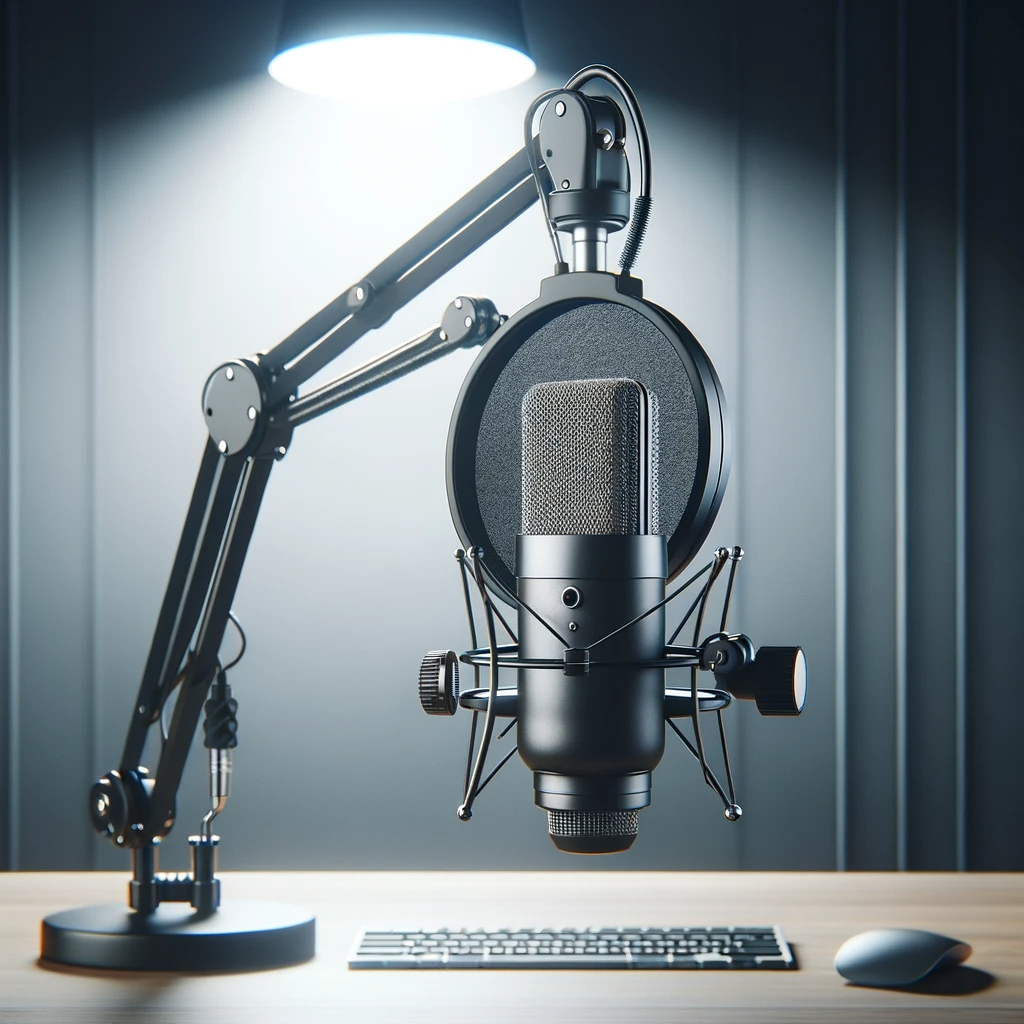
The Shure SM7B is the iconic JRE microphone. Rogan and his guests have used it for years, including in the Austin era, and recent JRE equipment inventories continue to identify it as the show’s microphone.
Why the SM7B works so well for a show like JRE
The SM7B is a dynamic cardioid microphone designed for close speech and broadcast-style use. Shure lists a 50 Hz–20 kHz frequency response and emphasizes its off-axis rejection, internal shock isolation and protection from electromagnetic hum.
In normal language: it is good at capturing the person sitting directly in front of it without making every little room sound the star of the recording.
That is especially useful for long conversational podcasts where people are sitting across a table, moving around and occasionally getting loud.
The catch: the SM7B needs gain
The original SM7B has relatively low output. Shure recommends a preamp capable of roughly +60 dB of gain for many applications.
That does not mean you automatically need a Cloudlifter. It means your interface or mixer needs enough clean gain. Many newer interfaces can handle an SM7B without an extra inline booster.
If yours cannot, an inline preamp is one solution:
Shop SM7B mic activators / inline preamps
SM7B vs. SM7dB: what should you buy now?
This is where copying Rogan exactly may not be the smartest move.
Shure now sells the SM7dB, which keeps the SM7B design but adds a built-in active preamp offering +18 dB or +28 dB of gain. That can simplify the entire setup for a home podcaster.
Shop the Shure SM7dB on Amazon
| SM7B | SM7dB | |
|---|---|---|
| JRE connection | The documented Rogan mic | Not claimed as Rogan’s mic |
| Built-in preamp | No | Yes |
| Setup complexity | Higher | Lower |
| Best for | People with a strong interface/preamp | People who want an easier signal chain |
| Sound goal | Classic SM7 sound | Designed by Shure to retain SM7B sound |
Our take: if your goal is owning the actual famous JRE microphone, get the SM7B. If your goal is simply building an excellent podcast setup with fewer gain headaches, the SM7dB may be the more practical purchase.
2. Headphones: Sennheiser HD 280 Pro
Status: recently documented JRE gear.
The Sennheiser HD 280 Pro continues to appear in recent JRE equipment inventories.
Shop Sennheiser HD 280 Pro on Amazon
They are closed-back monitoring headphones rather than fashionable consumer headphones. Sennheiser lists strong ambient-noise attenuation, a folding design, 64-ohm impedance and an 8 Hz–25 kHz frequency response.
For podcasting, the important part is simpler: closed-back headphones help keep the monitor feed from bleeding back into the microphone.
Are the HD 280 Pros worth copying?
Yes, if you want functional studio headphones. They are relatively affordable compared with the rest of a professional podcast setup and there is no need to overthink this part.
For a filmed show, understated closed-back headphones also make more sense than giant flashy gaming headsets.
3. Microphone arm: O.C. White Ultima Gen2
Status: recent inventories identify Ultima Gen2; older sources identify Gator Frameworks arms.
This is a good example of why the old version of this page needed an overhaul.
Older JRE equipment lists often named a Gator Frameworks desk-mounted arm. More recent inventories identify O.C. White Ultima Gen2 low-profile boom arms.
The correct conclusion is not that one source must be fake. It is that the studio changed equipment.
Search O.C. White Ultima microphone arms on Amazon
Do you need a premium boom arm?
No.
A boom arm needs to:
- hold a heavy microphone without sagging
- move quietly
- stay out of the camera shot
- position the mic close to the speaker
For a video-first studio, the low-profile design is genuinely useful. For a normal home podcast, a less expensive arm can do the job.
Browse podcast boom arms on Amazon
4. Audio interface: this is where the internet gets messy
The original version of this page confidently listed multiple different signal-chain components — Behringer mixers, an old Universal Audio Apollo FireWire interface, Focusrite hardware and recorders — without explaining when any of them were used.
That is not useful buying advice.
A recent 2025 equipment inventory identifies the Focusrite Scarlett 18i8 3rd Gen as part of the JRE setup. Focusrite’s own documentation confirms that model provides four mic preamps, additional line inputs, ADAT expansion and two independent headphone outputs.
Shop Focusrite Scarlett interfaces on Amazon
We are labeling the exact interface recently documented, not permanently confirmed, because JRE does not maintain a public live spec sheet for its backend studio rack.
What interface should you buy for an SM7B?
Buy based on your number of microphones and required gain, not Rogan’s rack.
| Your setup | What makes sense |
|---|---|
| 1 mic | Modern 1–2 channel interface with strong clean gain |
| 2 mics | 2+ XLR preamps and two usable headphone paths |
| 3–4 people | 4+ mic inputs or a dedicated podcast console |
| Video podcast / live production | Interface or console with easy routing and monitoring |
If you are building a simple one-person podcast, buying an 18-input interface just because JRE reportedly uses one is unnecessary.
5. Historical mixers, recorders and interfaces
These products matter to JRE history, but they are not where we would spend money in 2026.
Behringer XENYX X1222USB
The X1222USB has appeared in older JRE equipment lists. It is a traditional analog-style mixer with USB connectivity.
It helped make sense in an earlier podcasting era when a physical mixer was often the easiest way to manage several microphones. Today, many creators can accomplish the same basic job more cleanly with a modern interface or podcast console.
See current podcast mixers on Amazon
Universal Audio Apollo FireWire
Older lists identify a FireWire-era Universal Audio Apollo.
FireWire alone should tell you this is historical buying information. Do not hunt down legacy hardware simply because JRE once used it.
If you want Universal Audio today, look at the company’s current USB/Thunderbolt interfaces rather than copying an old model.
Browse Universal Audio interfaces on Amazon
TASCAM DR-100mkII
The DR-100mkII has also been listed as a backup/portable recorder in old JRE setups. It is discontinued-era hardware and is not a sensible default recommendation for someone building a new studio.
Modern field recorders are smaller and easier to integrate.
Browse current TASCAM recorders on Amazon
6. JRE cameras and video production
This is another area where old lists age badly.
The Canon VIXIA HF G40 and older Blackmagic production hardware have appeared in historical JRE gear lists. They may be relevant to how the show was produced at a particular point in time, but that does not make them the best camera purchases now.
Video systems change faster than microphones. Camera bodies, switchers, codecs, lighting and capture workflows can all be upgraded without viewers noticing a dramatic visual difference.
What should you copy from JRE instead?
Copy the production principles:
- multiple consistent camera angles
- flattering, controlled lighting
- microphones kept close to each speaker
- a clean background and deliberate set design
- reliable monitoring and redundant recording
Those choices matter more than buying a decade-old camcorder model.
7. The JRE chair and desk
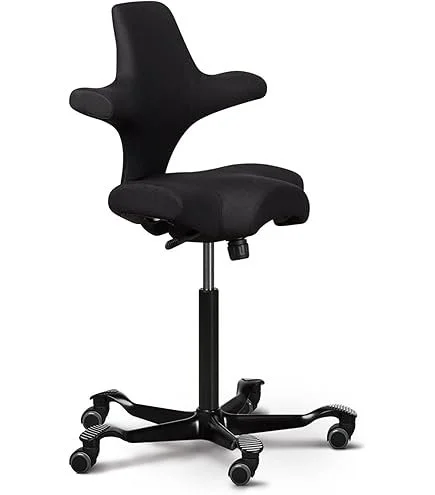
Rogan’s studio has also been associated with the HÅG Capisco chair, and we maintain a separate guide specifically on the Joe Rogan podcast chair.
Shop HÅG Capisco chairs on Amazon
The desk itself is much less useful to copy because studio furniture is dictated by room shape, camera placement, number of guests and cable routing.
A custom desk does not improve your audio by itself.
The setup we would build instead
If the goal is JRE-style sound without buying obsolete JRE gear, this is a much cleaner approach.
Closest practical JRE-style setup
- Mic: Shure SM7B
- Headphones: Sennheiser HD 280 Pro
- Arm: quality low-profile boom arm
- Interface: modern interface with enough gain and enough XLR inputs for your guest count
- Recording: computer + DAW / podcast software
Easier home-studio version
- Mic: Shure SM7dB or another quality dynamic podcast mic
- Headphones: any reliable closed-back monitoring headphone
- Interface: modern 2-input interface for a one-host/one-guest show
- Arm: good mid-priced desk arm
This gets you far closer to the functional reason JRE sounds good than buying an old mixer and camcorder because they appeared on a gear list years ago.
What matters more than copying Joe Rogan’s equipment
Podcast gear has a point of diminishing returns.
Once you have a good dynamic microphone, enough clean gain and reliable monitoring, these things usually matter more:
- Mic placement. The SM7B is designed for close use. Six inches farther away can matter more than hundreds of dollars in extra hardware.
- Room acoustics. A quiet, controlled room beats an expensive mic in a reflective kitchen.
- Consistent levels. Guests who drift away from the mic are hard to fix later.
- Good conversation. The equipment is not why people sit through a three-hour JRE episode.
- Reliable workflow. A simple setup you can record every time is better than a complicated rack you barely understand.
Best JRE gear to buy on Amazon
If you are shopping rather than researching the history, these are the links that make the most sense:
| Product | Why buy it? | Link |
|---|---|---|
| Shure SM7B | The actual iconic JRE microphone | Amazon |
| Shure SM7dB | Easier modern version with built-in gain | Amazon |
| Sennheiser HD 280 Pro | Practical JRE-style monitoring headphones | Amazon |
| Low-profile boom arm | Cleaner video framing and mic positioning | Amazon |
| Focusrite Scarlett interfaces | Simple modern XLR-to-computer recording | Amazon |
Amazon pricing and inventory change constantly, so we use current search links instead of publishing prices that will be stale next month. The site’s Amazon system automatically applies our affiliate tracking code to qualifying links.
More JRE gear guides
- Joe Rogan podcast chair
- Joe Rogan books
- Joe Rogan supplements
- Joe Rogan kettlebells
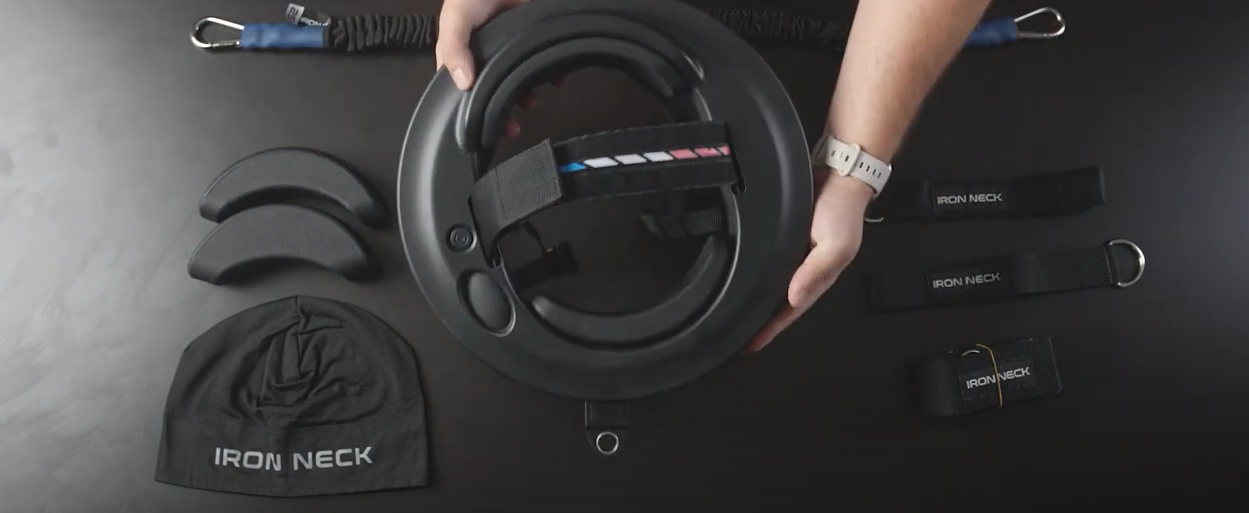
- Joe Rogan Iron Neck guide
Sources and verification
There is no official JRE page that continuously publishes every current piece of studio hardware, so we use a confidence-based approach rather than presenting one third-party list as gospel.
- Shure SM7B: official specifications and setup guidance for the microphone most consistently documented on JRE. Shure SM7B
- Shure SM7dB: official documentation for the newer version with a built-in +18/+28 dB preamp. Shure SM7dB
- Sennheiser HD 280 Pro: official specifications for the closed-back headphones found in recent JRE inventories. Sennheiser HD 280 Pro
- Focusrite Scarlett 18i8 3rd Gen: official specifications for the interface identified in a recent JRE equipment inventory. Focusrite 18i8
- What.Equipment JRE profile: equipment inventory verified in September 2025, identifying SM7B, HD 280 Pro, Ultima Gen2 and Scarlett 18i8 3rd Gen. View the profile
- JRE Library equipment guide: useful historical/current reference for changes across JRE studios. View JRE Library
Editorial note: if a piece of studio hardware is not publicly confirmed by JRE, we label it as documented by a source rather than claiming Rogan personally uses that exact component forever.