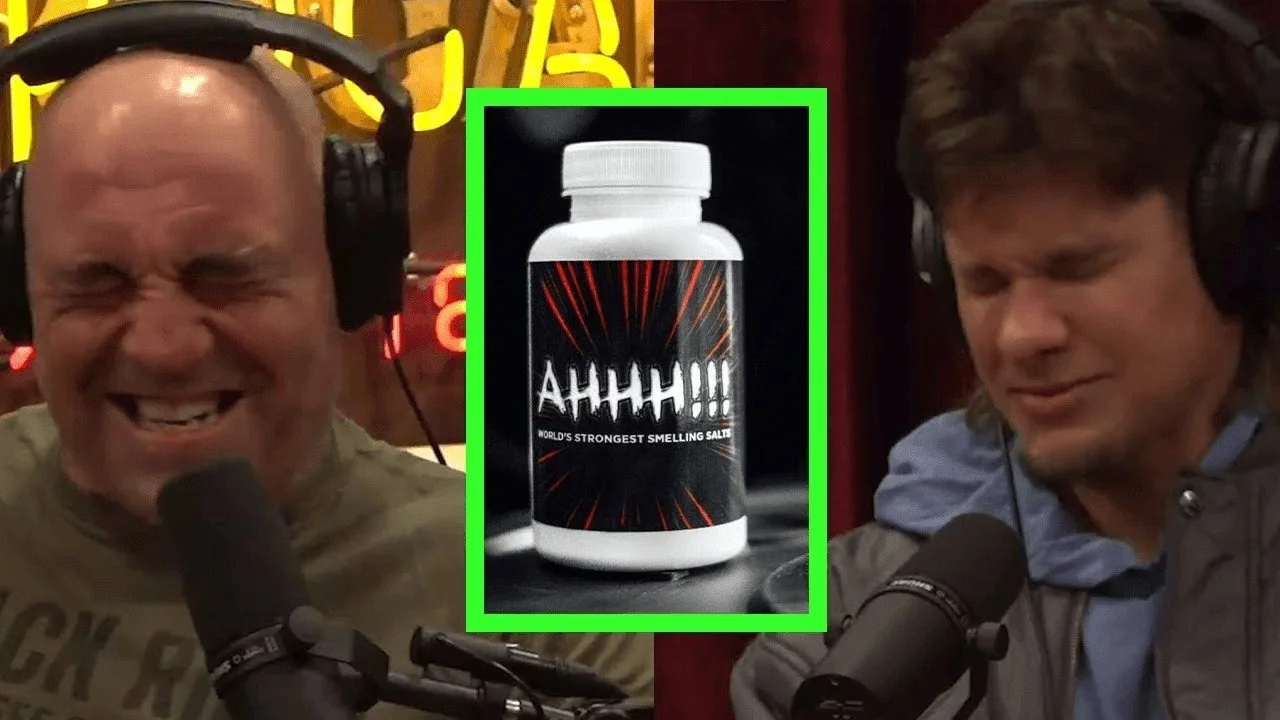
Smelling salts have become a recurring JRE gag because the reaction is immediate and dramatic. But the product itself is simple: ammonia vapor irritates the upper airway, triggering a reflexive inhalation and a short burst of alertness.
That is different from proving that smelling salts make you stronger, improve athletic performance or safely ‘wake up’ an injured person.
Why Joe Rogan uses smelling salts on the podcast
On JRE, smelling salts are usually entertainment first. Rogan and guests have opened strong ammonia products, taken a cautious sniff and reacted to the intense burning sensation.
The effect can feel like a sudden reset because ammonia activates sensory nerves and produces a rapid respiratory response. It is not a stimulant in the same way caffeine is, and the effect is very short-lived.
Do smelling salts improve strength or performance?
The evidence is much less exciting than the reaction videos.
Small studies of ammonia inhalants have generally found little or no consistent improvement in maximal strength, sprinting or power output. Athletes may feel more psyched up, but subjective arousal is not the same thing as a meaningful performance gain.
That makes smelling salts closer to a pre-lift ritual than an evidence-based performance supplement.
The biggest safety mistake: head injuries
Smelling salts should not be used to wake up or ‘test’ someone after a suspected concussion.
If a person has been hit in the head, is confused, unconscious or neurologically abnormal, they need appropriate medical evaluation. An ammonia inhalant can provoke sudden head movement and may distract from symptoms that matter.
That old sports-movie use case is exactly the one to avoid.
How to use smelling salts more safely
If a healthy adult chooses to use them:
- follow the manufacturer’s distance and exposure instructions
- do not put the container directly under the nostrils
- avoid direct skin or eye contact
- use in a ventilated area
- do not repeatedly inhale for a stronger effect
- stop if you develop significant coughing, wheezing, eye pain or breathing difficulty
People with respiratory disease or strong chemical sensitivities should be especially cautious.
What brands show up around JRE?
Brands and packaging change, and JRE clips often feature whatever strong ammonia product is around rather than one permanent ‘official Rogan brand.’ That is why we would shop by sealed packaging, clear instructions and reputable manufacturer rather than chasing an old screenshot.
Browse smelling salts on Amazon
Smelling salts vs. caffeine
| Smelling salts | Caffeine | |
|---|---|---|
| Main effect | Brief sensory jolt | Central nervous system stimulation |
| Duration | Seconds to minutes | Hours |
| Evidence for performance | Limited/inconsistent | Stronger for endurance and alertness |
| Best use | Short arousal ritual | Sustained alertness/performance |
If you want actual sustained alertness, our Joe Rogan Neuro Gum guide covers caffeine plus L-theanine in a more practical format.
Sources
For research, see PubMed’s indexed literature on ammonia inhalants and athletic performance and sports-medicine discussions of ammonia inhalants in head injury.
Bottom line
The JRE appeal is obvious: smelling salts create an instant, hilarious reaction. The physiological reality is narrower. They can produce a sharp burst of alertness, but they are not a proven strength enhancer and should never be used as concussion treatment.