Gary Brecka has helped make red light therapy a mainstream biohacking topic, especially among people who follow Joe Rogan, longevity podcasts and home-wellness gear.
The technology itself is legitimate. The marketing around it is where things get messy.
Red and near-infrared light are used in photobiomodulation (PBM), and research supports some specific applications. That does not mean every panel improves testosterone, melts fat, fixes depression, reverses aging and “supercharges mitochondria” all at once.
Quick take: Red light therapy is most defensible as a targeted tool with promising or established evidence in certain skin, hair, wound and pain-related contexts. If you buy a home device, focus on dose, treatment area, specifications and consistency, not just the biggest panel or highest irradiance number in an ad.
Browse red light therapy devices on Amazon
What is red light therapy?
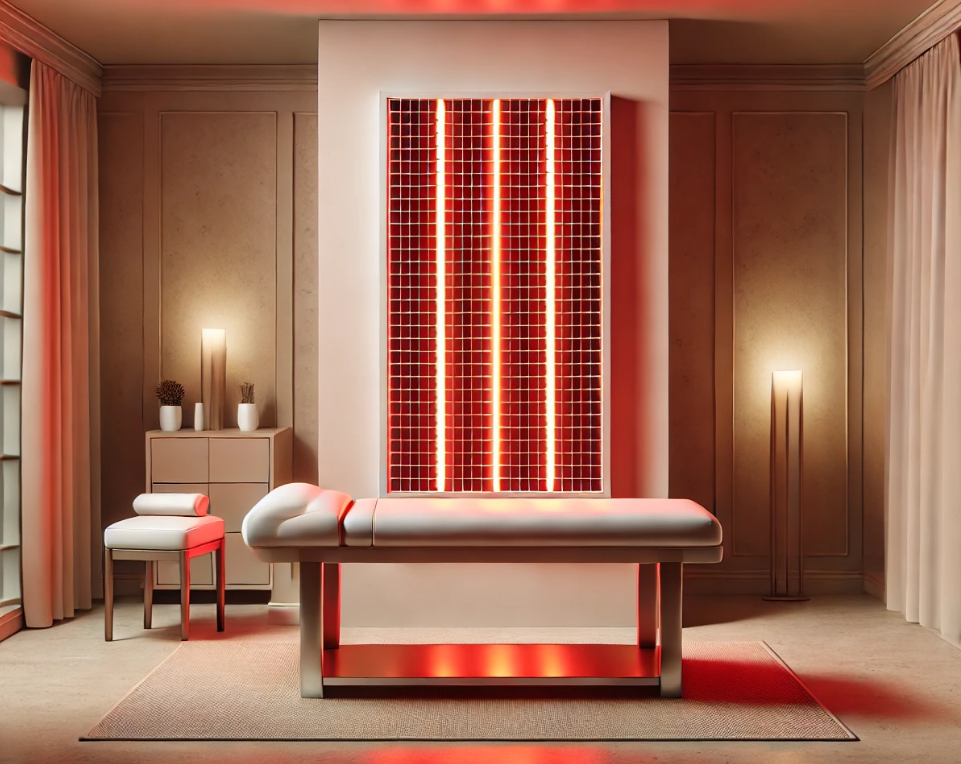
Red light therapy is a consumer-friendly name for one form of photobiomodulation. Devices expose tissue to specific wavelengths of red or near-infrared light at non-thermal doses.
The proposed biological effects involve light-sensitive cellular processes and signaling pathways. Mitochondria are often part of the explanation, but the phrase “boosts mitochondrial energy” is too broad to use as proof that every claimed health benefit follows.
Clinical outcome data matter more than the mechanism story.
Red light vs. near-infrared light
Home devices commonly combine visible red light with invisible near-infrared wavelengths.
| Type | Common consumer ranges | Typical reason it is included |
|---|---|---|
| Red light | Roughly 630–670 nm | More superficial skin/tissue applications |
| Near-infrared | Roughly 810–850 nm | Deeper tissue penetration |
Those ranges are common, not magical. A device can advertise the “right” wavelengths and still deliver a poorly characterized dose.
What does the evidence actually support?
The answer depends heavily on the condition.
A 2025 evidence-based clinical consensus concluded that photobiomodulation is a generally safe modality in adults and identified supported uses including androgenetic alopecia, some wound-care applications and several pain-related conditions. A 2025 umbrella review of randomized trials found benefits across several outcomes but emphasized that the certainty of evidence was often low-to-moderate and protocols varied substantially.
That is a much more useful summary than saying red light “works” or “doesn’t work” as one giant category.
Skin and photoaging
Red/LED light has promising evidence for modest improvements in things such as fine lines, redness and skin appearance when used consistently. Results from home devices are usually not dramatic or immediate.
Hair growth
Certain light-based devices have evidence for androgenetic alopecia, or common pattern hair loss. Again, that does not mean any red lamp pointed at the scalp is equivalent to a studied device.
Pain and recovery
Photobiomodulation has been studied for musculoskeletal pain, osteoarthritis-related outcomes and exercise recovery. Results depend on the condition and protocol.
This is a reasonable area of interest. It is not proof that a home panel guarantees faster recovery after every workout.
Cognition, mood and longevity
These are much easier to overstate.
Some research is genuinely interesting, including trials in neurological and cognitive contexts. But consumer “brain optimization” claims usually run far ahead of the certainty of evidence.
For general healthy users, we would not buy a panel primarily because an ad promises better cognition, testosterone or lifespan.
Gary Brecka’s role in the popularity
Brecka often discusses health optimization through the lens of oxygen, cellular function, recovery and personalized wellness. Red light therapy fits naturally into that world because it is non-invasive, technology-driven and easy to use at home.
His enthusiasm is useful for discovering the topic. It is not clinical evidence by itself.
The right question is not “Does Gary Brecka like red light?” It is “What outcome am I trying to improve, and is there evidence that this kind of device and dose helps with that outcome?”
Home panel vs. mask vs. targeted device
| Device type | Best for | Upside | Downside |
|---|---|---|---|
| Full/half-body panel | Large treatment area, general routine | Covers more body at once | Expensive, bulky |
| Face mask | Facial skin routine | Convenient and targeted | Small treatment area |
| Targeted handheld/wrap | Knee, elbow, scalp or other local area | More focused, easier to store | Slow for whole-body use |
Browse red light panels on Amazon
Browse red light face masks on Amazon
What to look for when buying a red light panel
1. Treatment area
This is the first thing people underweight. A powerful tiny device still requires a lot of repositioning if you want to treat your back, legs and torso.
If your goal is whole-body convenience, panel size may matter more than a slightly higher claimed power number.
2. Wavelengths
A combination around the common red and near-infrared ranges is normal for general-purpose panels. More wavelengths are not automatically better.
3. Irradiance stated at a real distance
Manufacturers often advertise irradiance, generally expressed in mW/cm². That number is only meaningful if the company says at what distance it was measured and gives usable dosing guidance.
Do not simply buy whichever product claims the largest number.
4. Dose and session instructions
Photobiomodulation is dose-dependent. Longer and stronger are not necessarily better.
A serious manufacturer should explain:
- treatment distance
- session duration
- recommended frequency
- whether red and near-infrared channels can be controlled separately
5. Eye-safety guidance
Follow the device instructions. Some products include eye protection or specify when it should be used.
Cleveland Clinic notes that misuse can potentially harm skin or eyes and recommends carefully following directions for home devices.
6. Warranty and return policy
This category is full of expensive hardware. A meaningful warranty and return period are practical buying criteria, not afterthoughts.
7. FDA language
Be careful with phrases such as “FDA registered.” That is not the same thing as a device being FDA-cleared for a specific indication.
If you are buying a device to treat a medical condition, the regulatory status for that claim matters more than wellness branding.
How often should you use red light therapy?
There is no universal protocol because studies use different devices, doses and target conditions.
That is why copying “10 minutes every day” from one influencer is not ideal. Use the protocol provided for your device and intended use.
Consistency over weeks is usually more realistic than expecting an obvious change after one or two sessions.
Is red light therapy safe?
Short-term use appears generally well tolerated when appropriate devices are used as directed. But “non-invasive” does not mean everyone should ignore precautions.
A Cleveland Clinic dermatologist advised caution for people with photosensitive disorders and people taking medications that increase light sensitivity. If that applies to you, ask a clinician before adding a home device.
Also do not use red light therapy as a substitute for evaluation of a suspicious skin lesion, unexplained pain, hair loss with an unclear cause or another medical problem.
Is a home red light device worth it?
It can make sense if:
- you have a specific goal with reasonable evidence behind it
- you will actually use the device consistently
- home use is more convenient than repeated clinic sessions
- the device has transparent specifications and instructions
It is probably not worth it if:
- you expect dramatic whole-body “anti-aging” effects
- you are buying solely because an influencer uses one
- the company cannot explain dose, distance or irradiance
- you dislike routines that require consistent use for weeks or months
Red light therapy vs. sauna and cold plunge
These get grouped together in the Rogan wellness world, but they are different interventions.
Red light therapy uses light exposure at specific wavelengths. Sauna uses heat stress. Cold plunge uses cold exposure. Evidence, risks and protocols differ substantially.
If you are building a broader recovery setup, see our Joe Rogan sauna guide and Joe Rogan cold plunge guide.
Sources
- Cleveland Clinic — Can Red Light Therapy Improve Your Skin and Hair?
- PubMed — Evidence-based consensus on clinical photobiomodulation
- PubMed — Umbrella review of randomized photobiomodulation trials
Related Rogan Recs guides
- Joe Rogan sauna guide
- Joe Rogan cold plunge guide
- Joe Rogan supplements
- Gary Brecka PEMF and grounding mats
Bottom line
Red light therapy is not fake, and it is not a universal biohacking cheat code.
There is legitimate evidence for specific photobiomodulation uses, with especially useful data in certain skin, hair, wound and pain-related contexts. The farther a claim moves toward “total-body optimization,” the more skeptical you should become.
If you buy a device, choose it for the outcome you care about, understand its dose and specifications, and use it consistently rather than buying the biggest glowing panel on the internet.